CHAPTER 28: THE WARNING REMEMBERED
Spring came slowly to the mountains around Ashford.
Eleanor had lived above the bookshop for several months when Richard’s lawyer finally delivered a proposal for a formal separation.
The document included conditions concerning property and future correspondence.
Abigail Mercer reviewed every page before Eleanor made a decision.
Eleanor refused a clause requiring her never to speak about the events at Willow Creek.
She said silence was the condition that had caused so much harm in the first place.
The agreement was revised to protect lawful confidentiality without preventing truthful testimony.
Eleanor signed only after she understood every obligation.
She kept the copy in a drawer she could lock herself.
On a Saturday morning Daniel visited Richmond to deliver a set of iron fixtures ordered by Catherine’s father.
He arrived at the bookshop wearing a clean work coat and carrying the fixtures wrapped in canvas.
Catherine greeted him with obvious amusement and then made a convenient excuse to inspect an upstairs window.
Eleanor offered Daniel tea at the small table near the back door.
They spoke first about Jonah’s progress and the new work coming into the forge.
Daniel said the apprentice had begun correcting his measurements with confidence.
Eleanor said Catherine’s father had finally persuaded her to accept payment for the correspondence she prepared.
They laughed at the ordinary difficulty of learning to value work.
Then the conversation grew quiet.
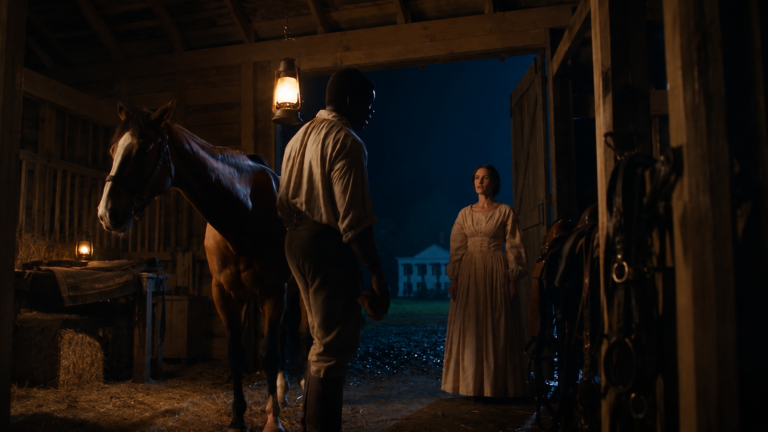
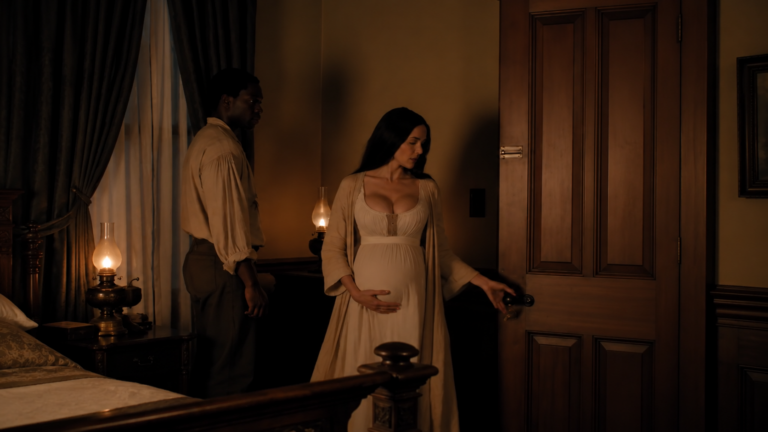
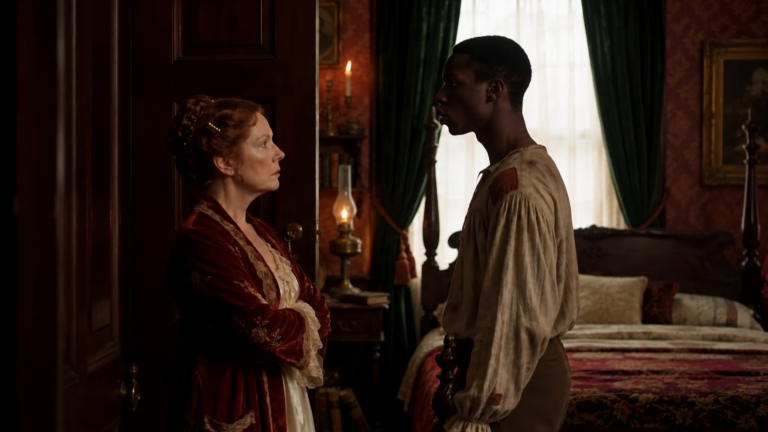
Daniel told Eleanor he had thought about their first meeting in the locked bedroom many times.
He said he had feared for her safety and for what a cruel rumor could do to them both.
Eleanor remembered how he had questioned the door and the blue ribbon instead of taking advantage of her distress.
She said his warning had frightened her because it revealed that someone else controlled access to her private life.
Daniel replied that he had never wanted her to feel she owed him a future because he helped her escape that danger.
Eleanor told him she knew.
She said she was still learning what it meant to make choices without fear of being punished for them.
Daniel answered that he could wait for a friendship to grow without demanding it become something else.
Eleanor placed her teacup on the table and smiled.
She said she would like that friendship very much.
They spent the afternoon walking through the public gardens with Catherine nearby.
They discussed ordinary things that had once seemed impossible to imagine together.
Daniel described a new forge he hoped to build with better ventilation and room for two apprentices.
Eleanor described her wish to help women keep copies of marriage agreements and family correspondence.
Neither promised marriage, and neither needed to.
Months later Eleanor visited the forge with a packet of books for Jonah.
She watched Daniel demonstrate the careful movement of a hammer against heated iron.
The workshop was loud, and its floor was stained with honest work.
Nobody there hid letters behind a wall or controlled who entered a room after dark.
Daniel asked whether she was comfortable staying for supper.
Eleanor answered that she would decide after writing to Catherine about her return journey.
He handed her clean paper without asking what she intended to write.
She laughed because the gesture seemed so ordinary.
For Eleanor, ordinary trust had become more precious than the jewels she left behind.
Before sunset she walked outside and looked toward the hills beyond Ashford.
Willow Creek Ranch lay somewhere beyond those ridges, but she no longer measured her life by its distant gates.
She thought of Lydia tending a garden beside her brother’s home.
She thought of Hannah working at her kitchen table while her children played in the yard.
She thought of Jacob Hayes, whose final written truth had outlived the men who tried to silence it.
Eleanor had entered the locked bedroom believing she needed someone to repair a piece of iron.
She had discovered instead that the greatest danger was not the lock itself.
It was the belief that another person had the right to decide when she could speak, whom she could trust, and whether she could leave.
Daniel had warned her about the hidden door, but he had never asked her to exchange one locked life for another.
She walked back into the workshop because she wished to be there.
That simple choice was the freedom she had struggled so hard to claim.