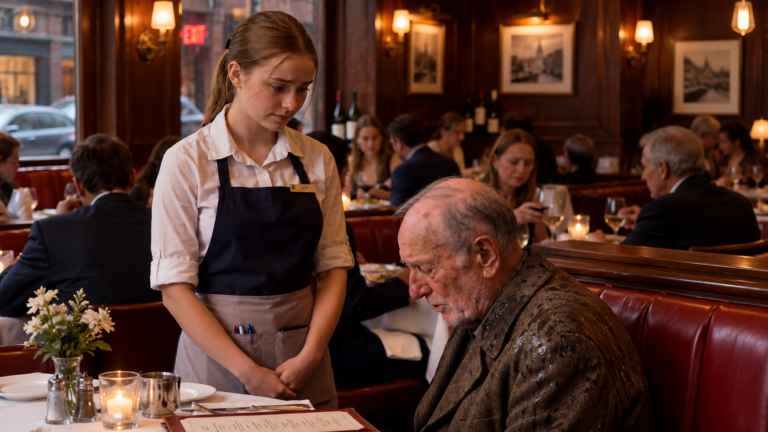
She appeared exhausted and admitted that her finance department had relied on summaries prepared by Meridian.
The service company had been treated as a trusted intermediary, which meant very few people checked its underlying claims.
Edwin Marsh asked who owned Meridian.
Maya handed him a corporate disclosure naming a holding company managed by Charles Renwick’s brother-in-law.
The trustees looked at one another without speaking.
Samuel asked whether Charles had disclosed the relationship to the board.
Maya said she had found no signed conflict-of-interest statement, but she would continue looking.
Yvonne Booker asked about the senior residence that had received imaginary deliveries.
Margaret showed her the closure notice.
Yvonne’s anger was immediate.
“People in this city went hungry while someone wrote reports about meals served to an empty building.”
Samuel put his hands flat on the table.
He had imagined the inquiry might reveal negligence, perhaps even arrogance, but the ledgers suggested a longer deception.
“We will let the evidence establish who approved those bills,” he said.
“Then we will make the trust whole.”
That afternoon Preston’s attorney submitted a response to the allegations against him.
The manager claimed that the charity arrangement was dormant and that all employees understood the policy.
He enclosed an undated handbook page prohibiting personal purchases for noncustomers.
Nora recognized the formatting as part of a revised policy circulated only after Claire’s termination.
She located the older handbook in her files and sent it to Elena through a secure channel.
The older version permitted employees to buy meals for guests with supervisor approval.
It made no distinction based on appearance or ability to pay.
Elena explained that even a permissive policy would not automatically prove the dismissal unlawful, but the conflicting versions mattered to credibility.
Claire listened as Elena read the differences aloud.
She felt the old humiliation return when she imagined Preston rewriting rules while she stood in the street without a job.
“Why is he working so hard to prove a bowl of soup was a crime?” she asked.
“Because the soup is the one part of this case everyone understands,” Elena answered.
“The other records are harder to explain, and he knows it.”
CHAPTER 11: 11. The Night Shift
Hector Ruiz had worked at the Bellwether for six years without appearing in a promotional photograph.
He arrived before dawn to scrub ovens and stayed late whenever the closing crew fell behind.
His younger daughter wanted to attend art school, and he saved cash in an envelope beneath the kitchen sink.