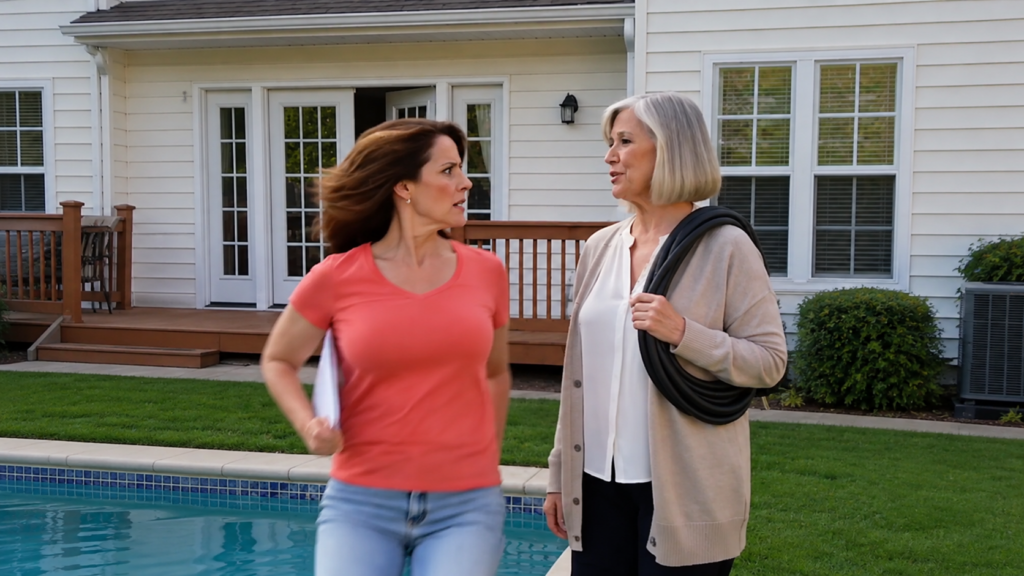
The first thing Lena Ortiz noticed was the yellow ribbon tied around her gate.
It was not the kind of ribbon people used to welcome a new neighbor.
Someone had pulled it tight enough to bend the wire mesh and had fastened it with a knot used on construction sites.
Lena stood on the porch with her grocery bag against her hip and watched the ribbon move in the wind.
Across the street, Celia Brant was pretending to water a row of dry flowerpots.
Celia had spent the last three weeks telling everyone that Lena’s house was dangerous.
She had called the porch steps rotten,
the kitchen wiring suspicious, and the backyard fence an invitation to thieves.
Lena had listened without correcting her.
That silence had apparently convinced Celia that the new woman at number eighteen would be easy to frighten.
Lena set down the groceries and approached the gate.
A handwritten card hung beneath the ribbon.
The card warned that the property had been marked for a safety inspection.
There was no agency name, telephone number, or date.
Lena photographed the card before touching anything.
Celia turned off the hose.
“You should take warnings seriously,” she called.
“I do,” Lena answered.
Celia frowned because the reply sounded less frightened than she expected.
Lena untied the ribbon and folded it into her pocket.
She had moved into the house to disappear from the professional world for six quiet months.
She had not moved there to surrender her front gate to a stranger.
Chapter Two: A Name Nobody Recognized
At the grocery store the following morning, Lena learned that Celia had been telling a different story.
The cashier asked whether the county had condemned Lena’s house.
A delivery driver said he had been warned not to enter the driveway.
An elderly man waiting for coffee asked whether Lena was planning to move again.
Lena bought her bread and asked each person exactly what Celia had said.
The answers were similar enough to suggest a prepared script.
Celia claimed to have received confidential information from a safety consultant.
She insisted that the consultant could not be named until an inspection was completed.
Lena knew how such rumors worked.
They made ordinary people do the work of an accusation while protecting the person who started it.
At home, Lena called the county permit office and asked whether anyone had filed a complaint about number eighteen.
The clerk found no inspection request, open case, or scheduled visit.
Lena thanked her and wrote down the time of the call.
She then called the woman who had helped her buy the house.
“Is there something about this place you forgot to tell me?” Lena asked.
Her agent, Priya Shah, sounded genuinely surprised.
“The house passed every inspection,” Priya said.
“I kept the reports because you asked for the originals.”
“Then somebody wants the neighborhood to believe a different version.”
“Do you want me to confront her?”
“Not yet.”
Lena looked through the front window at Celia’s empty porch.
“I want to know what she expects to happen after everyone believes her.”











