Chapter Three: The Route Nobody Counted
On Saturday I drove to Briar County before sunrise.
I did not tell Laura where I was going.
We had slept in separate rooms, and we had not spoken beyond matters concerning the house.
The Marigold bookmobile was parked behind the county maintenance shed when I arrived.
Its driver, Inez Calder, was securing a box of returned books with an elastic strap.
She recognized my name and did not offer her hand.
“You’re one of the people trying to park my bus.”
“I’m one of the people who signed a bad assumption.”
“That sounds more polite.
”
“It isn’t meant to.”
I told her I wanted to ride the route and observe without interviewing anyone on camera.
She crossed her arms.
“You can ride if you carry boxes and don’t ask people to perform gratitude for your report.”
“Agreed.”
I climbed aboard and found a narrow aisle lined with shelves, a tiny desk, and a heater that rattled on every turn.
There were children’s novels with cracked spines, seed catalogs, large-print mysteries, and instruction books for repairing farm equipment.
A paper calendar near the driver’s seat had hand-drawn stars marking visits to Pine Hollow, Mercer Junction, and the Red Mill senior apartments.
“My model shows nineteen appointments at Pine Hollow last month,” I said.
Inez snorted.
“I carried ninety-seven books off this bus on the last visit alone.”
“Are those separate borrowers?”
“Some are.”
“How many?”
“You can count while I work.”
At Pine Hollow, the bus stopped beside a former grocery store where the asphalt had grown grass through its cracks.
A line had formed before the doors opened.
An elderly man returned a stack of western novels tied with twine.
A teenager collected examination guides for a nursing program.
Two sisters selected picture books and argued over which one could carry the heavier bag.
A woman in a work uniform asked Inez to print a housing application because her phone would not display the form.
The online appointment system counted only the teenager, who had reserved her guides through the county portal.
The other visitors used paper cards or arrived without reservations.
“How many people got served?” I asked when we left.
“Thirty-one,” Inez said.
“The dashboard would count one.”
“The dashboard never helped anybody put a book in a child’s hands.”
At the next stop, an older resident named Mr. Fenwick needed a large-print cookbook with recipes suitable for his dietary restrictions.
Inez found two options and explained why the simpler one might work better with his equipment.
He did not use the digital catalog because the county’s website required a password he had forgotten months earlier.
At Red Mill, a mother picked up books for three children while her infant slept against her shoulder.
She described how the bus’s weekly visits had helped her oldest child catch up after struggling to read aloud in class.
“The school library closes before I finish work,” she told me.
“Are you the consultant?”
“Yes.”
“Then you should come when it’s raining.”
“Why?”
“Because people wait anyway.”
By late afternoon I had counted eighty-six individual visitors, but only eleven had appeared in the online appointment record.
The route was not efficient by a narrow calculation of digital consultations per mile.
It was indispensable by almost every measure the community used to describe it.
Inez parked the bus at the maintenance yard and watched me gather my notes.
“Do you understand why I’m angry?”
“Yes.”
“I don’t think you do.”
She opened a locker and removed a binder filled with handwritten attendance sheets.
“They asked us to record names and visits, so we did.”
“Did you send these to Westbridge?”
“Every Friday.”
“Who received them?”
“Your client experience people.”
She showed me an email address, and I recognized Laura’s team distribution list.
“Those totals weren’t included,” I said.
“I know.”
“Did anyone explain why?”
“One young man told me our numbers weren’t verifiable because they were handwritten.”
“What man?”
“Adrian something.”
Inez closed the binder.
“He offered to arrange a digital demonstration so the county could see how outdated our work looked.”
I felt a chill that had nothing to do with the November wind.
“When is the demonstration?”
“Wednesday afternoon.”
“The day before the vote.”
“That’s what he said.”
On my drive home, I called Nadia and described the attendance sheets.
She did not interrupt until I reached the planned demonstration.
“Michael, our presentation has a slide about the demonstration.”
“I’ve never seen it.”
“It’s in a version your account apparently approved Friday night.”
I had been on the road Friday night, buying groceries and trying not to look at Laura’s empty side of the bed.
“I didn’t approve anything.”
“Then we have a bigger problem.”
Chapter Four: The Visitor
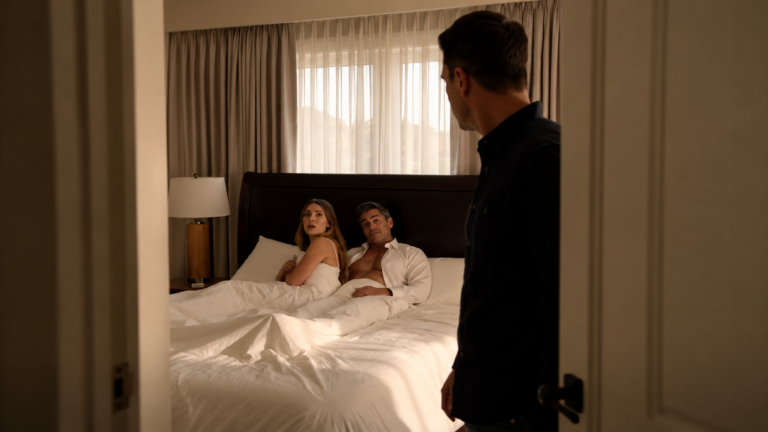
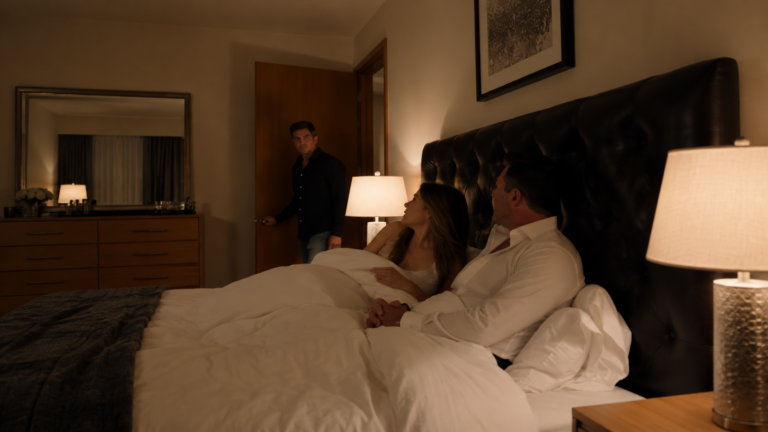
Laura was waiting in the living room when I got home.
She had folded the blanket I usually left over the armchair.
That tiny act of housekeeping made the room feel like a hotel.
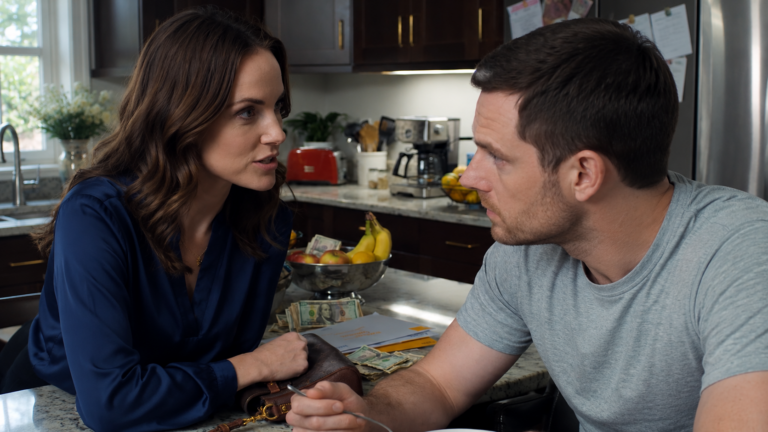
“Where were you?”
“Briar County.”
“You had no authority to visit a client site.
”
“The people operating the service invited me.”
“Adrian says you’re interfering with an active review.”
“You told Adrian where I was?”
“I didn’t have to.”
I set my coat on the chair.
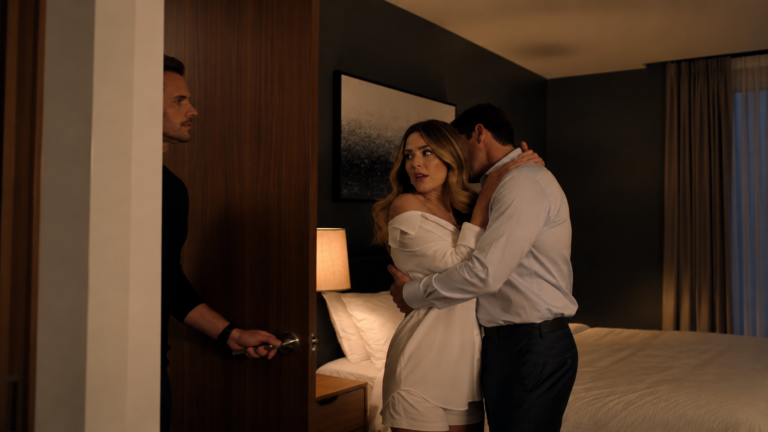
“When did you start seeing him?”
“You already asked me that.”
“You never answered.”
She sat down.
“In August.”
“We were both working on the library project in August.”
“It wasn’t about the project.”
“Was it a coincidence that he joined our vendor meetings the same month?”
“He made me feel like somebody interesting again.”
I let that sentence settle rather than trying to deny it.
“I believed you were interesting before you met him.
”
“You believed I was useful.”
“Those aren’t the same thing.”
“You don’t get to rewrite how I felt.”
“And you don’t get to use how you felt to answer a question about work.”
Laura rubbed her forehead.
“He said the county wanted a simpler story.”
“What did that mean?”
“That the original interviews were inconsistent, and we needed clear examples.”
“Did he write the examples?”
“He suggested the format.”
“Whose names did you put on them?”
“Names from a sign-in sheet.”
“Without their permission?”
She closed her eyes.
“Yes.”
The room seemed to shift around me.
“Why?”
“He told me everyone did it in early-stage engagement.
”
“You know that isn’t true.”
“I know now.”
“And he said he could fix the investigation.”
“He said the review was mostly about our documentation standards.”
“Did he tell you to lie to me?”
“No.”
“Then why did you?”
She looked at our wedding photograph above the sideboard.
“Because the affair began as something separate, and then everything became connected.”
I did not ask whether she loved him.
The more important truth had already arrived.
“I’m not going to help hide this.”
“I haven’t asked you to.”
“You asked me not to tell Naomi.”
“Because I thought we could fix it first.
”
“We can correct records, but we cannot make invented people give real testimony.”
“Michael, the whole firm’s reputation is at stake.”
“So are four library routes.”
She became angry again.
“You speak as though every decision we make is a moral monument.”
“No.”
“You do.”
“I think a report should describe what happened.”
Laura looked down at her hands.
“Adrian is coming tomorrow.”
“Here?”
“He wants to explain.”
“He can explain to the lawyers on Monday.”
“He thinks you need to hear his side.”
“I can hear it in a meeting with witnesses.”
She stood.
“You are making this personal.
”
“It became personal when you told me you were dating him.”
Neither of us moved for a long time.
Then she went upstairs, leaving me alone with the furniture we had chosen together.
I slept badly and woke at five to an email from Nadia.
She had located an original set of survey responses in a locked archive owned by the county, not our firm.
The records contained handwritten objections to the route closures.
In the version shown to senior management, those objections had been transformed into statements welcoming remote service.
The change was not a careless summary.
Someone had reversed the meaning of the responses.
Chapter Five: Monday
Outside counsel arrived at Westbridge carrying two laptop bags and expressions that discouraged ordinary conversation.
The meeting room smelled of cold coffee and printer toner.
Naomi sat beside the firm’s general counsel, Saira Khan, while a representative from human resources arranged water glasses nobody wanted.
Laura entered alone.
Adrian arrived five minutes later, wearing a navy suit and the mild smile of a man who expected an easy conversation.
He was taller than I had imagined.
That embarrassed me more than it should have.
I had tried not to imagine him at all.
“Michael,” he said, offering his hand.
I kept mine on the table.
“Adrian.”
His smile held for another second and disappeared.
Saira began by explaining that the meeting concerned Westbridge’s contract with Briar County and the integrity of its public-engagement materials.
She asked everyone to speak only about matters they knew directly.
Nadia displayed the original field logs beside the revised report.
“These handwritten returns record opposition to closures,” she said.
“The submitted narrative describes the same residents as supporting remote replacement.”
Adrian leaned back.
“Qualitative material requires interpretation.”
Nadia selected a sentence from the source.
“This resident wrote that she cannot use the internet at home.”
She then showed the published version.
“The submitted quotation says she prefers the convenience of online scheduling.”
“That is an editorial paraphrase.”
“It says the opposite.”
Laura watched the screen without speaking.
Saira asked whether anyone had interviewed the resident after receiving her written comment.
Adrian said his contractors had conducted follow-up calls.
Nadia asked for the call records.
He promised to provide them later.
“We need them today,” Saira said.
“My staff are traveling.”
“Then please tell us where the recordings are stored.”
He named a vendor platform that Westbridge no longer used.
Nadia pulled up the access records and showed that no files had been uploaded there in the relevant period.
Adrian shifted in his chair.
“I wasn’t managing every entry.”
“Who was?” Saira asked.
“The communications team.”
Laura looked at him.
“You told me your contractors performed those calls.”
He gave her a quick warning glance.
“We can discuss workflow later.”
“You told me specifically.”
Saira raised a hand.
“Laura, please continue.”
Laura took a breath.
“Adrian sent me sample testimonials with placeholders for names.”
“Did you fill them in?”
“Yes.”
“Did you verify the words with those people?”
“No.”
The room became very quiet.
Adrian set his pen down.
“You’re leaving out the context.”
Laura looked at him as if she had only now seen the shape of his face.
“You said you had done the interviews.”
“I said my team gathered sentiment.”
“You said the people were real.”
“They are real people.”
“Those words weren’t theirs.”
Adrian sat forward.
“The purpose of qualitative analysis is to communicate overall trends.”
I heard my own voice before I intended to speak.
“You changed the denominator to create the trend.”
All eyes turned toward me.
I explained the difference between library cards, households, and appointment records.
Nadia demonstrated how the corrected denominator altered the forecast.
Under the original model, the proposed closures produced a modest saving but created a severe service gap for several communities.
The gap had disappeared in the submitted report because attendance by walk-in borrowers was missing.
Naomi looked sick.
“Why didn’t our review process catch it?”
“Because the source map was edited after the last signed technical review,” Nadia said.
“Whose account made the change?”
“A vendor administrator account associated with Mr. Vale.”
Adrian shook his head.
“Access does not prove authorship.”
“You’re correct,” Nadia said.
“That’s why we also have the vendor request authorizing the alteration.”
She displayed the request on the screen.
The attached description explicitly ordered the team to exclude walk-ins because they were unlikely to convert to the new digital service.
Adrian stared at the wall rather than the evidence.
Saira asked whether he had disclosed his relationship with a member of the client team.
He said personal relationships had no bearing on the work.
“Did you disclose it?” she repeated.
“No.”
Laura made a sound that was almost a laugh.
“You told me you had.”
“I wasn’t required to discuss my private life with every client.”
“But you were required to disclose a conflict,” Saira said.
Naomi ended the meeting by suspending Westbridge’s recommendation and notifying the county that the supporting engagement figures were unreliable.
Adrian stood as though he intended to challenge the decision, but he left without speaking.
Laura stayed seated.
“I need to say something,” she told Saira.
“Please speak with counsel privately before providing more detail,” Saira answered.
Laura looked at me.
I understood that she wanted me to reassure her.
For years that had been my role whenever she felt threatened or embarrassed.
This time I said nothing.