Chapter Eleven: Saturday’s Demonstration
The first buyers entered the front gate shortly after nine.
Some came for furniture, others for horses, and several for the enslaved people Gideon intended to sell.
The lawn filled with umbrellas and impatient voices.
Hester watched the arrivals from the kitchen window and recognized Shaw among the men gathering near the carriage shed.
Mrs. Vale took her place beside the property tables, while Dent prepared the printed lots.
Gideon welcomed Bell with forced enthusiasm.
Catherine appeared at the veranda doors in a cream dress without a single piece of jewelry.
She noticed Ruth near the doorway and looked away.
The demonstration began with the bay horses.
Rusk ordered Daniel to hitch them to the carriage while buyers inspected the seats.
Daniel examined the harness in full view of the visitors and found the narrow leather strap he had marked the previous evening.
It had worn nearly through beside the buckle.
He held it up.
“This cannot safely carry passengers,” he said.
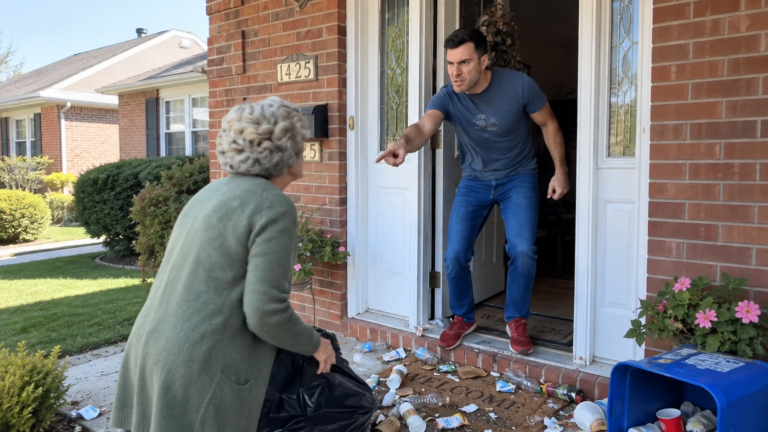
Rusk stepped toward him.
“You’ve had the entire morning to prepare it.”
“I requested a replacement yesterday.”
“You will use what you have.”
Daniel looked toward Shaw, who was standing with three buyers beside the gate.
“A broken trace could turn the carriage when the team is moving downhill,
” he said.
One of the men examined the strap and frowned.
“He’s right.”
Gideon came through the crowd.
“What is delaying us?”
Rusk said the stable workers were finding excuses not to proceed.
Daniel held out the strap again.
“This leather will not hold, sir.”
Bell had joined the group by then.
He asked to see the damaged section.
The man beside Shaw explained the risk in plain language.
Gideon ordered a fresh strap brought from the tack room.
Amos returned with one and began fitting it while the buyers watched.
The delay gave Daniel time to point out the uneven wheel hub and the mare’s sensitive shoulder.
He explained each problem without accusation and showed how it could be corrected.
The practical detail impressed some visitors and irritated others who wanted the demonstration finished.
Shaw approached Lewis and asked whether he could perform the same work on a strange team.
Lewis answered truthfully.
“I would need to examine the horses and their harnesses first, sir.”
Shaw laughed.
“I asked whether you can drive.”
“I can drive a sound team, sir.”
“And if I tell you the team is sound?”
Lewis looked toward Daniel, then back at Shaw.
“I would still need to examine it.”
Shaw’s smile vanished.
“These people have been taught to argue.”
Amos tightened the replacement buckle.
“We have taught them not to injure a horse or its passengers.”
Rusk stepped forward with his crop, but Gideon stopped him before the watching buyers.
Bell examined the repaired strap and said the demonstration could proceed when Amos was satisfied.
The carriage moved across the lawn without incident.
Visitors applauded the smooth turn around the oak tree.
But Shaw no longer looked eager to buy Lewis without asking further questions.
He wanted a worker who would obey instantly, and Lewis had shown him a man who would insist on inspecting the work.
That distinction unsettled the merchant.
After the carriage returned, Dent called the next lots toward the front steps.
The lawn grew quiet as the first enslaved workers were ordered into view.
Ruth stood with Ellen and Betsy near the kitchen entrance.
Daniel watched from beside the carriage, unable to move without Rusk’s permission.
He understood that the successful demonstration had delayed one buyer but had not changed the structure of the sale.
Gideon could choose another purchaser.
Dent announced Lewis’s name.
Amos made a small involuntary sound.
Shaw raised his hand, offering a figure below the expected price.
Another man lifted his cane to bid higher.
Then Bell asked Dent whether the auction inventory still carried the earlier allegation against Daniel.
Dent looked annoyed.
“The correction has been noted.”
“Was it read aloud?”
“The property is present and available for inspection,” Dent replied.
Bell did not move.
“That wasn’t my question.”
Gideon approached with a hard smile.
“We settled that matter yesterday.”
A buyer near the front asked what had happened.
Shaw said he had been told the stable hand was untrustworthy.
Mrs. Vale stepped forward before Gideon could answer.
“The missing jewelry was found inside Mrs. Whitcomb’s trunk,” she said.
“The worker was accused without cause.
”
Catherine rose from her chair beneath the veranda.
“You have no right to repeat private household business.”
Mrs. Vale faced her calmly.
“I have a duty to correct the inventory I prepared.”
An uneasy murmur passed through the buyers.
Gideon looked at Bell, who stood motionless with his arms folded.
The creditor did not ask the master to reconsider the morality of the sale.
He asked why material information had been withheld while people were bidding.
The question threatened the transaction itself.
Gideon ordered Dent to suspend the proceedings until the afternoon.
Several buyers complained loudly.
Shaw demanded to know whether the workers being offered had other accusations attached to them.
The question spread from one group to another.
Rusk tried to herd Lewis back toward the stable, but Amos stepped beside his brother and remained there.
For the first time all morning, the men were not moving in opposite directions.
Chapter Twelve: The Decision in the Yard
The suspended auction left Gideon facing a crowd of angry buyers, a worried creditor, and a wife whose actions had become public knowledge.
He summoned Catherine into the study and shut the door hard enough to shake the glass.
Ruth heard their raised voices from the passage.
Catherine accused Gideon of humiliating her to protect his creditors.
Gideon accused her of nearly destroying the sale with a lie.
Neither spoke about what Daniel had endured behind the locked bedroom door.
Their argument concerned embarrassment, money, and who would be blamed for the loss.
Hester returned to the kitchen, where workers gathered beside the long preparation table.
Some wanted to celebrate the delay, but Amos warned that Gideon could resume the auction elsewhere.
Daniel agreed.
“We have stopped today’s buyers from pretending they know everything,” he said.
“We have not stopped the master from selling us.”
Ellen asked whether Bell might persuade Gideon to sell more furniture instead.
Ruth repeated the creditor’s position as accurately as she could.
Bell wanted payment, and he had not demanded that payment come from selling people.
The distinction gave them a narrow opening.
Mrs. Vale came into the kitchen to request coffee, and Hester asked whether Gideon had another way to satisfy his debt.
The appraiser glanced toward the door.
“His carriage collection alone is worth considerably more than the amount due this week,” she said.
“The horses are trained, and there are buyers prepared to pay.”
Hester asked why the human lots had been scheduled first.
Mrs. Vale hesitated.
“Mr. Dent believes those lots attract more bidders.
”
Hester waited without speaking.
“That does not mean they must be sold first,” the appraiser added.
When Mrs. Vale left, Daniel looked at Amos.
“The carriages are ready to sell, then.”
“And the finest two teams are still in the barn,” Amos replied.
They could not compel Gideon to sell objects rather than people.
They could, however, make the financial alternative visible before the assembled buyers departed.
Daniel asked Hester to send word that the carriage collection could be demonstrated immediately.
Hester refused to carry a message falsely claiming Gideon’s approval.
Instead she asked Mrs. Vale to suggest a revised sale order directly to Bell.
The appraiser agreed that it was commercially sensible to dispose of undisputed assets before attempting another contested transaction.
Bell brought the suggestion to Gideon, who resisted until Dent warned that the crowd might simply leave.
At two in the afternoon the auction resumed with carriages and horses rather than people.
The first carriage sold after a spirited exchange between two local merchants.
The next received a higher price than Gideon expected.
A matching harness set drew several bidders who admired Amos’s careful repairs.
Daniel demonstrated how to adjust the reins for the bay mare, and a buyer purchased the entire matched team.
Gideon watched the figures rise with an expression Daniel could not read.
By late afternoon enough goods had sold to satisfy the immediate payment Bell required.
The creditor made no claim that the remaining people were safe.
He merely stated that the debt due Monday could now be covered.
Gideon stood before the crowd while Dent asked whether the suspended human lots would proceed.
Rusk waited beside the stables, and Lewis held his breath.
Gideon looked at the empty carriage spaces and the money promised by buyers.
He knew his creditors had been satisfied for the moment.
He also knew a second public dispute would damage his already shaken reputation.
“Those lots are withdrawn today,” he announced.
Amos closed his eyes.
Lewis pressed a hand against the barn wall.
Ruth gripped Ellen’s shoulder so tightly that the girl gently lifted her fingers away.
The decision did not erase the estate’s power over them.
It did, however, mean that Lewis would not leave in Shaw’s carriage that evening.
Catherine watched from the veranda as the buyers departed.
Her anger had set the events in motion, but no one was asking her what happened next.
She approached Ruth after the last carriage rolled through the gate.
“You have made yourself important,” she said.
Ruth did not lower her eyes.
“I only told them what you did.”
Catherine opened her mouth, then closed it again.
For once there was no locked door, no private room, and no frightened person alone before her.
Hester stood beside Ruth, Ellen stood beside Hester, and Amos and Daniel were approaching from the stable yard.
Catherine turned and went back into the house.
Epilogue: The Unlocked Door
On Sunday morning Gideon ordered the tack room bolt removed and returned Daniel’s tools.
He did not apologize for the accusation.
He announced only that the household would resume its usual work and that further sales would require his personal approval.
Daniel heard the warning in those words as clearly as he heard the temporary relief.
Nothing about the previous day had made the estate a safe place.
The people who had avoided separation remained enslaved, and Gideon still possessed the authority to change their lives.
Yet the events had taught them something practical about how to act together under pressure.
Ruth continued to serve in the upstairs rooms, but she refused to enter Catherine’s chamber alone when another servant could accompany her.
Hester made sure that the younger workers knew who had witnessed the jewelry discovery.
Amos and Lewis repaired the remaining harnesses and spoke openly about the importance of inspecting every animal before a journey.
Ellen continued reading whatever notices she could see, and she asked difficult questions whenever adults tried to answer with comforting half-truths.
Daniel returned to the stable where the injured mare had first brought him Catherine’s summons.
He washed her shoulder carefully and adjusted the collar until she stood without flinching.
Ruth came to the doorway carrying a bowl of warm bread.
“You should have been allowed to leave that room without paying for it,” she said.
Daniel set down the brush.
“You should have been allowed to tell the truth without risking Ellen.”
Neither tried to make the other person’s danger smaller.
They sat beside the open stable door as afternoon sunlight reached the clean boards.
From the house came the sound of a trunk being carried downstairs, followed by Catherine’s sharp voice giving instructions.
Daniel listened until the footsteps moved away.
Then he stood and hung the mare’s repaired harness on its proper hook.
“The next time somebody orders me behind a locked door,” he said, “I want someone to know where I am.”
Ruth nodded.
“Then we will know.”
The End.