At four, the servers’ group chat erupted.
Jules, the bartender, reported that Calvin had told everyone Marissa had voluntarily walked off her shift.
Niko, a line cook, said the manager had removed her name from the weekend roster before lunch ended.
A dishwasher named Omar sent a photograph of the shift board.
Marissa’s hours had been divided among staff who were already working overtime.
She typed a reply, deleted it, and called Jules instead.
“You don’t have to defend me,” she said when he answered.
“I’m not defending you. I’m telling people what happened.”
“Calvin will retaliate.”
“He already cut my Sunday shift because I asked how the private-party gratuity was divided.
”
Marissa leaned against the refrigerator.
“What did he say?”
“He said management distributes everything fairly.”
“He says that whenever he won’t answer a question.”
“There’s something else.”
Jules lowered his voice.
“The owner is coming in tomorrow.”
“Francine?”
“Yes.”
“She hasn’t come in during service for months.”
“Someone important called her.”
Marissa knew who that someone might be.
She also knew a wealthy customer could make things worse with careless enthusiasm.
“Tell everyone not to sign anything without reading it,” she said.
“What would we sign?”
“I don’t know yet.”
“That’s comforting.”
“I didn’t promise comfort.”
Across town, Francine Harper received Ethan’s call during a dental appointment.
She asked the receptionist for a moment and stepped into the corridor.
Francine had founded Harper’s Table with her husband twenty-one years earlier.
He had been the chef; she had handled everything else.
When he died, she kept the restaurant running because closing felt like losing him twice.
Five years later, the business exhausted her more than it sustained her.
Calvin promised stability, and she surrendered most daily decisions to him.
Ethan introduced himself without mentioning his wealth.
Francine knew his name anyway.
“Are you really interested in buying my restaurant?” she asked.
“I’m interested in learning whether we can make it work better.”
“That’s a very expensive hobby.”
“My staff have said the same thing.”
“Calvin told me there was a disturbance.”
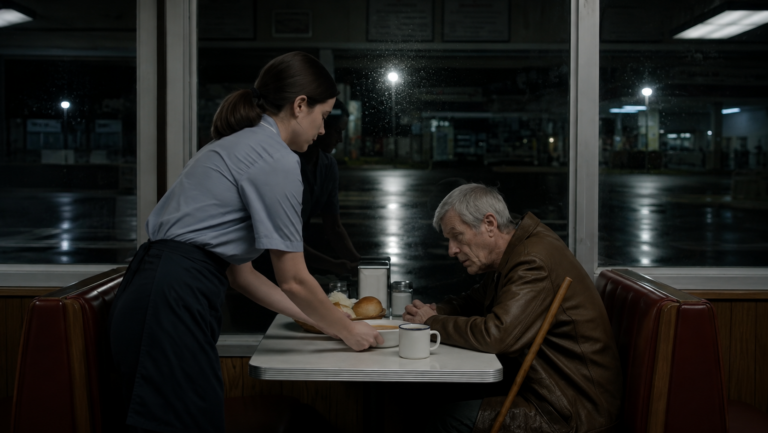
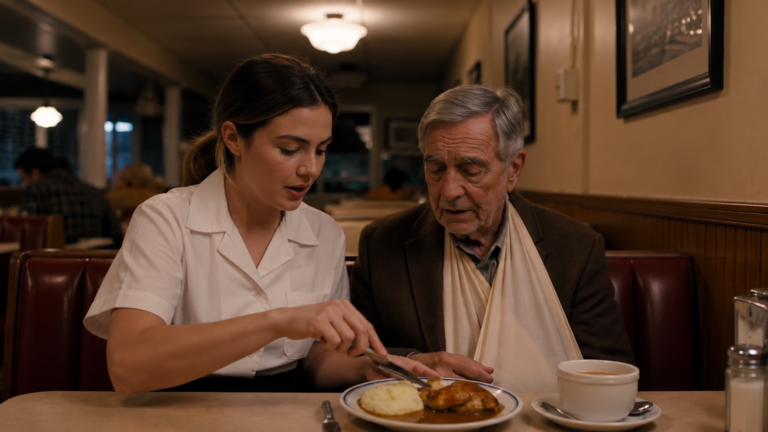
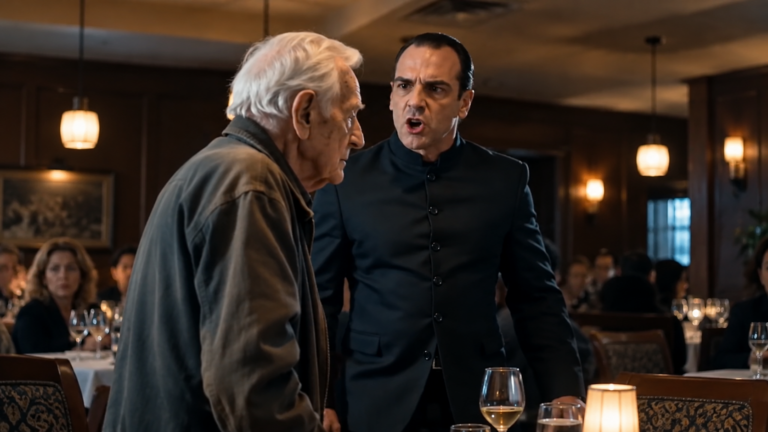
“An employee was dismissed for providing an elderly customer with lunch.”
Francine was silent.
“That doesn’t sound like the restaurant I built,” she said.
“Then I think you should visit it.”
“I plan to.”
“I’d like to meet without Calvin in the room.”
Francine gave a weary laugh.
“So would I.”
CHAPTER THREE — THE PRICE OF A STORY
The next morning, Marissa arrived at Harper’s Table wearing jeans and a black jacket.
She was not scheduled, but Calvin had texted that her final paycheck would be available for collection.
Through the window she saw Francine sitting at a rear booth with Priya.
Ethan stood beside the bar speaking to the chef.
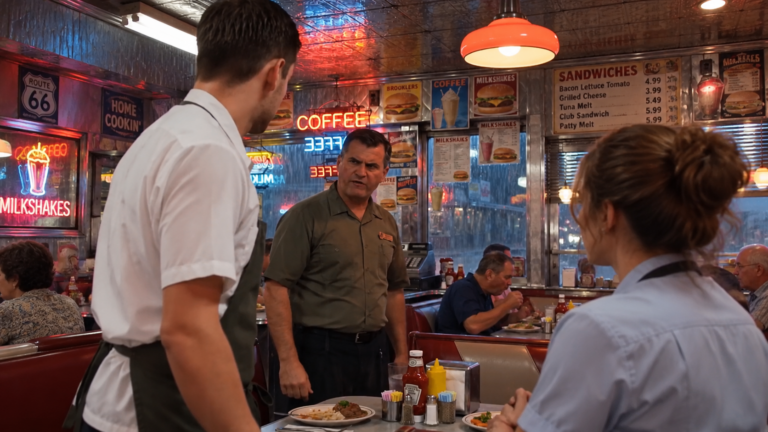
Calvin intercepted Marissa before she reached the counter.
“You are not allowed on the premises during business hours,” he said.
“I’m here for my check.”
“I’ll mail it.”
“You told me to collect it.”
He leaned toward her.
“You’ve embarrassed this restaurant enough.
”
Marissa took one step back to avoid the smell of his coffee.
“Then pay me for the hours I worked.”
“You’re creating a hostile environment.”
A voice behind Calvin interrupted him.
“I asked her to come.”
Francine Harper had risen from the booth.
She looked small beside Calvin, with silver hair and a blue scarf tucked into her coat.
Marissa remembered her as a woman who once stayed after closing to help scrub a sauce stain from the floor.
“Marissa, would you join us?” Francine said.
Calvin started speaking.
Francine raised a finger without looking at him.
“I’m talking to her.
”
The moment was quiet enough that Marissa could hear dishes being stacked in the kitchen.
Calvin withdrew to the office, furious.
At the booth, Ethan introduced Priya as his financial director.
Marissa recognized the kind of meeting that made employees nervous.
Four people sat around a table, but only one needed a paycheck by Friday.
Francine placed a folder in front of her.
“I’ve reviewed your record,” she said.
“That’s unusual,” Marissa replied.
“Your manager described you as insubordinate.”
“He fired me in front of customers.”
“I know.”
“You didn’t when he called you?”
Francine’s eyes dropped.
“No.”
Ethan watched without rescuing either woman from the silence.
Francine finally spoke.
“I should have known.”
“Yes,” Marissa said.
“Would you consider coming back?”
“Under Calvin?”
“We’re discussing his position.”
“Then I can’t answer until you finish discussing it.”
Francine accepted that.
Priya slid a blank sheet across the table.
“Mr. Calloway is considering a purchase, but he has asked us not to draft terms before consulting staff.”
Marissa looked at Ethan.
“You listened.”
“I listened to one thing. I might still misunderstand twenty others.”
That was the first answer she had liked.
“Then start with the schedule,” she said.
“You can’t change staffing without speaking to the people who cover the missing hours.
”
Priya began taking notes.
Marissa continued.
She described last-minute shift cancellations, split shifts without enough notice, and the policy requiring employees to purchase replacement aprons at an inflated price.
She explained how servers paid for customer walkouts even when the manager refused to call security.
She explained how the kitchen team could be blamed for slow service even when Calvin added extra tables without telling them.
Francine’s expression grew increasingly troubled.
“Why didn’t anyone tell me?” she asked.
Marissa met her eyes.
“People did.”
Francine opened her mouth and then closed it.
“My office has a suggestion box,” she said weakly.
“Calvin holds the key.”
Priya asked whether employees would be willing to speak individually.
“Not while they think doing so could cost them rent,” Marissa said.
“We can arrange confidentiality.”
“Confidentiality is what managers promise before someone loses a Tuesday shift.”
Ethan leaned forward.
“What would work?”
Marissa considered.
“Pay them for their time. Give them a meeting without Calvin or you sitting over their shoulders. Let them choose two people to bring their concerns to the owner.”
“I can do that,” Francine said.
“You could have done it yesterday.”
Francine nodded without arguing.
When Marissa stood, Priya handed her the final paycheck.
The envelope contained less than Marissa expected.
She checked the calculation twice.
“They deducted the meal,” she said.
Francine stared at the line item.
It showed the full menu price of Walter’s lunch, including a service charge.
Ethan gave a humorless laugh.
Francine reached across the table for the envelope.
“Let me correct that.”
“I want a written correction,” Marissa replied.
“You will have one.”
Marissa tucked the envelope into her bag.
She wished she could take a triumphant breath.
Instead, she worried about whether the pharmacy would still hold her mother’s medication until tomorrow.
Outside the restaurant, a reporter approached her with a microphone.
“Are you the waitress who was fired for feeding a homeless man?”
Marissa stopped.
“Who told you he was homeless?”
“A customer posted about it.”
“Then the customer guessed.”
“Did a billionaire really offer to buy the restaurant for you?”
“He didn’t offer to buy it for me.”
“Wouldn’t that be a wonderful outcome?”
Marissa looked back through the window.
Francine and Ethan were still talking at the booth.
“It depends on what happens to the people who already work there,” she said.
The reporter tried another question.
Marissa declined and walked away.
By evening, a short clip of that conversation had spread across local social media.
The headline described a miracle at Harper’s Table.
The people who still had to clock in the following morning did not feel particularly miraculous.
CHAPTER FOUR — THE PEOPLE WHO STAYED
By Friday morning, the story had developed opinions of its own.
Someone online called Calvin a monster.
Someone else accused Marissa of arranging the entire incident to attract a wealthy patron.
Neither writer had ever worked a lunch shift at Harper’s Table.
The kitchen staff had more immediate concerns.
A delivery of fresh produce arrived without the order number necessary for payment.
Calvin refused to sign the receiving slip.
The driver threatened to take the boxes away.
Niko, the lead line cook, stood on the loading dock with his hands on his hips.
“If you take those tomatoes, we have twelve reservations and nothing to serve with the special,” he said.
“Then call your buyer,” the driver replied.
“Our buyer is hiding in his office.”
The driver sighed.
“I can’t leave goods against a disputed account.”
Omar appeared in the doorway.
“He’s been here forty minutes,” he said to Niko.
“I noticed.”
Niko looked toward the office window and saw Calvin watching through the blinds.
The manager had refused a delivery before.
He liked making everyone beg him to solve a problem he had created.
This time, the driver was not interested in playing.
Marissa was walking to a temporary catering interview when Niko called.
“We’re about to lose half our produce,” he said.
“Did you contact Francine?”
“She’s on her way from the suburbs.”
“Did Calvin place the order?”
“Yes.”
“Is the vendor still owed money from last month?”
Niko went quiet.
“Apparently.”
Marissa stopped beneath an elevated train track.
“Don’t take the food unless the vendor agrees to leave it.”
“I know that.”
“Have Omar count the dishes you can sell from what you already have, and tell the front desk before the first guests arrive.”
“Would you call Priya?”
Marissa hesitated.
She did not want to become a shadow manager performing unpaid emergency work.
“I’ll make one call,” she said.
“After that, whoever owns this restaurant can earn their title.”