CHAPTER 12: THE LETTER FROM NEW ORLEANS
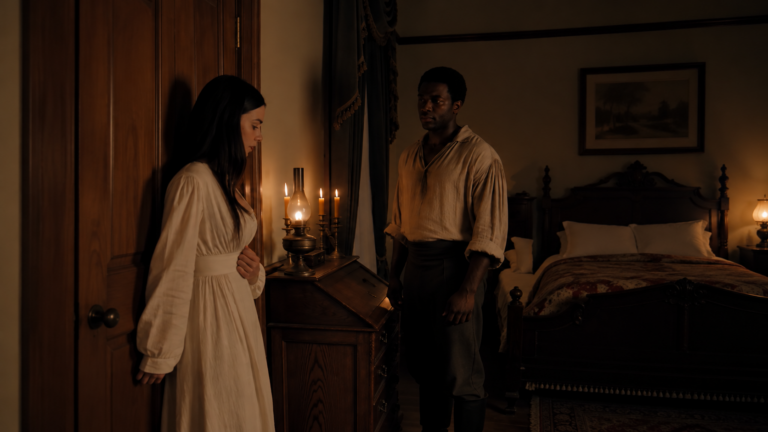
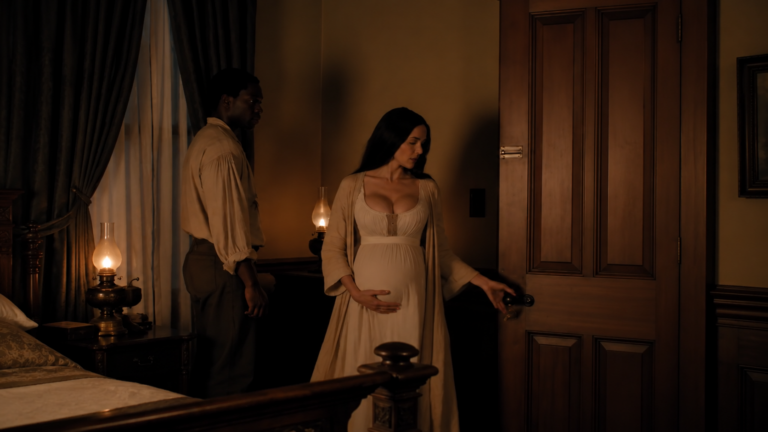
Three days later a letter arrived for Isabella bearing the seal of a New Orleans attorney.
The attorney represented the estate of Elias’s late aunt and had been trying to recover missing trust records.
He wrote that the trust had been intended to purchase freedom for certain individuals whose names were held separately from the public accounts.
After the aunt’s death, Elias had assumed control without completing the required reporting.
The attorney believed several certificates and receipts had disappeared.
Isabella showed the letter to Josiah in the presence of Ruth and Abel.
Ruth asked whether a certificate for their mother might exist.
The letter did not name her.
Josiah refused to let Isabella turn the possibility into a promise.
They agreed that any claim must be verified against original papers.
Bell inspected the copied ledger and discovered that a payment linked to their mother was labeled redemption rather than purchase.
That single word changed the direction of their search.
A redemption entry might mean someone had paid to obtain her freedom.
It might also describe an arrangement that was never completed.
The attorney requested a meeting with Isabella and any witnesses willing to provide information.
Josiah could not travel freely to New Orleans,
and the problem returned them to the power that confined him.
Ruth suggested sending Bell and Abel with the documents.
Abel refused to leave without assurances that he could return.
Bell offered to take the papers himself but warned them he could be pressured by creditors.
In the end, Isabella wrote a formal request for the attorney to visit Oakwood under the pretext of settling the trust.
She signed it in front of the cook and Bell.
Josiah kept a copy hidden inside a loose stable board.
He had no illusions about what documents could guarantee.
Nevertheless, he now possessed proof that more than one person knew the truth and could identify a lie if Isabella changed her story.
CHAPTER 13: A HOUSE DIVIDED
The plantation’s routines began to fray as Elias tried to regain control.
He dismissed two servants he accused of carrying messages between the quarters and the main house.
He threatened to reduce rations and ordered the overseer to keep the stable locked after dusk.
Ruth and Josiah adjusted their conversations to ordinary work hours.
They avoided the isolation that had made Isabella’s first visit so dangerous.
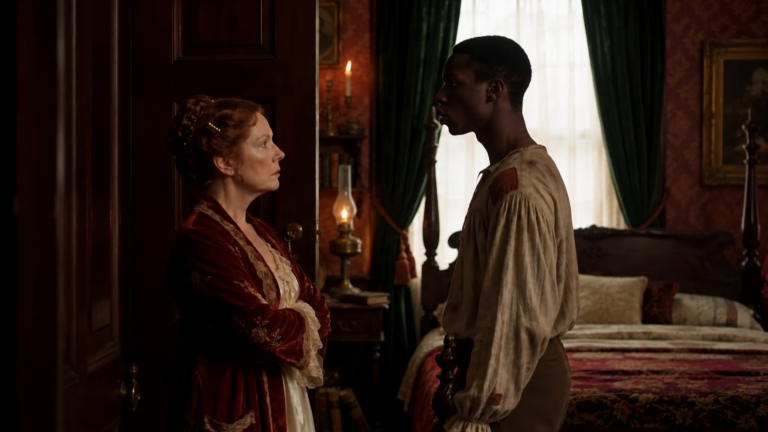
Isabella demanded that Elias answer questions about the trust in front of Bell.
Elias told her that she had embarrassed him and would regret it.
She replied that the account figures existed whether she remained silent or not.
Her refusal infuriated him because it disturbed the obedience he had long expected.
Yet Isabella remained a member of the household that benefited from forced labor.
She could move freely through doors that trapped other people.
Josiah watched her choices without granting her the authority to describe the harm she had caused as personal redemption.
One afternoon Mercy fell ill with a fever, and Ruth struggled to keep working beside her.
Isabella arranged for a local doctor to visit, but Ruth insisted on remaining in the room throughout the examination.
The doctor recommended rest and clean water.
The overseer objected to losing labor during harvest preparations.
Isabella told him that the doctor’s instructions would be followed.
Ruth accepted the assistance without forgetting the sale order.
After the doctor left, she said to Josiah that gratitude and trust were separate things.
Josiah agreed.
The fever eased after two nights.
Mercy asked whether the wagon would come back for her.
Ruth said she would do everything in her power to keep them together.
She did not promise that the world would become fair before morning.
Josiah heard the answer and understood that courage sometimes sounded less like certainty than an honest refusal to surrender.