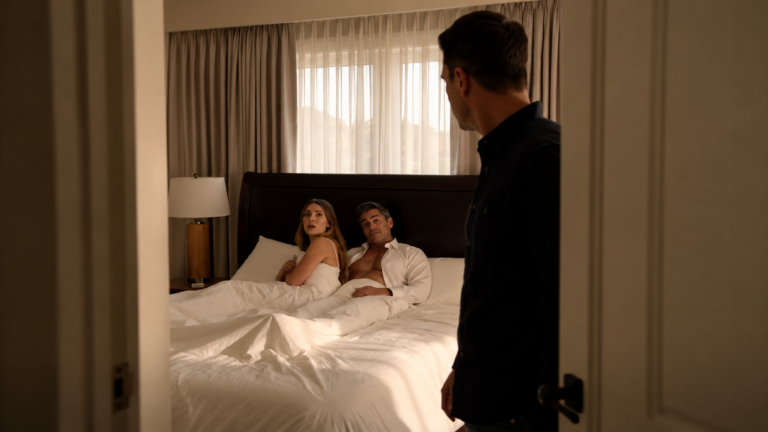
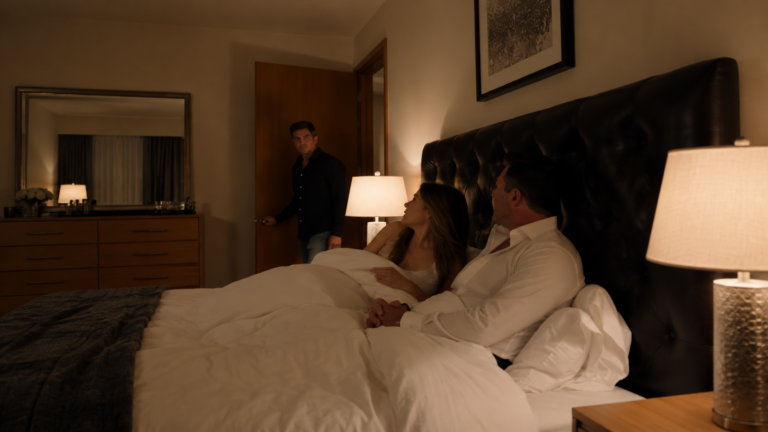
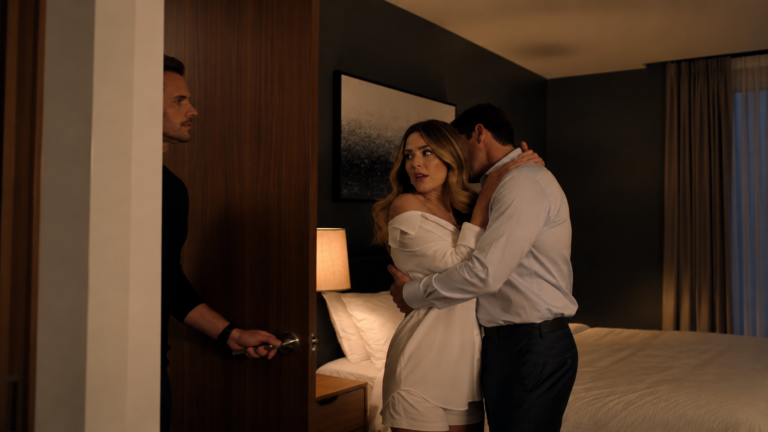
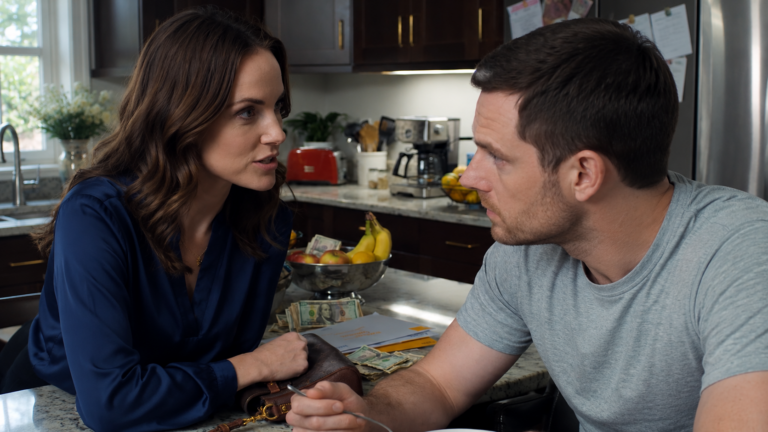
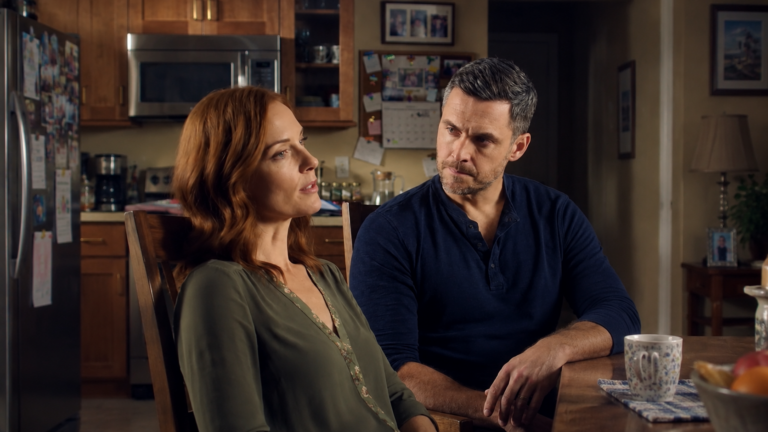
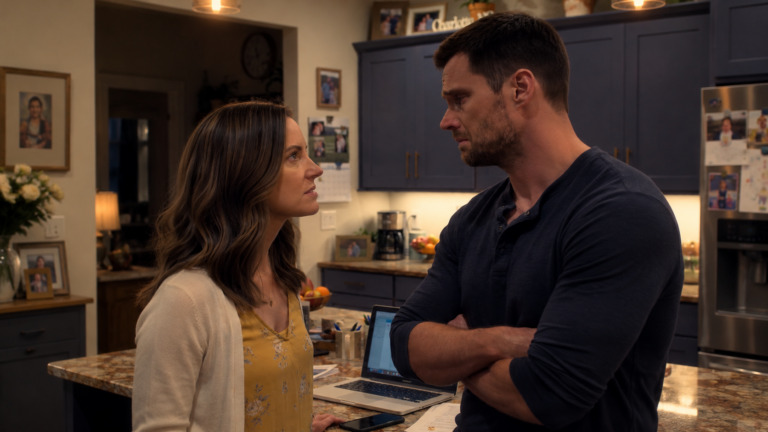
Owen stared at the questions. What struck him was not that Reid had wanted Lauren. He had known that. It was the neatness with which another man had reduced years of shared living to a line about somebody else’s choices. Owen and Lauren had married in a park with folding chairs borrowed from a church. They had eaten cold sandwiches on the floor while moving into their first apartment. They had once stayed up all night searching for a lost dog. They had also disappointed each other, failed to speak, and let weeks pass without tenderness. None of it fit on Reid’s page.
“If you were trying to find a way out,” Owen asked Lauren, “why didn’t you tell me before you told him?”
Lauren looked at the carpet. “Because you would have asked me what I wanted. And I didn’t know. He always had an answer ready.”
“That isn’t a reason to lie.”
“I know.”
Megan looked at her husband. “And you. Why did you tell Lauren we were separating?”
Reid took a step toward her. “We haven’t been happy.”
“You never told me you wanted to separate. You told me the restaurant needed another six months before we could talk about changing anything.”
“I was trying not to frighten you.”
“No,” Megan replied. “You were trying to keep every door open until you saw which room applauded.”
The image was so precise that nobody answered immediately. Reid stared at his hands. Outside, a cart rattled over the tile as a dishwasher moved clean glasses toward the bar. The business he had described as his creation continued through the labor of people who had not been consulted about its reinvention.
Lauren handed back the questions. “I am not your next chapter, Reid.”
He looked up sharply. “Then why did you come?”
“Because I behaved badly in my own marriage, and I thought coming here would make that mistake feel exciting instead of shameful. I was wrong.”
She turned to Owen. “That doesn’t mean I’m suddenly the wife you wanted when you handed me those pages.”
“I know,” he said.
“And it doesn’t mean I know whether we should stay married.”
“I know that too.”
The room held its silence. There was no triumphant unveiling, no agreement signed under pressure, no embrace that converted betrayal into a lesson. Megan picked up her coat.
“I’m going home,” she told Reid. “You can stay here tonight. We need to discuss the business with Hassan in the morning, and our marriage separately after that.”
Reid started to protest. She raised one hand.
“Not as a threat,” she said. “As the first plan tonight that you didn’t write for me.”
Chapter Eight: The Drive Back
Owen drove Lauren home in the rain. They had left her car in their driveway and his behind the hardware store, but neither commented on the fact that they were sharing a seat again. The windshield wipers moved at an unhurried speed. A radio host was discussing a local road closure. Lauren found herself listening to the details simply because they belonged to a world in which people still had ordinary problems.
“I didn’t know about the event,” she said after several minutes.
“I believe you.”
“I did know he was married.”
“I know.”
“And I wanted him to want me.”
Owen kept his eyes on the road. “Did you want him, or did you want a version of yourself you thought he’d give back?”
“Both, probably. I don’t get to pretend one cancels the other.”
He nodded, not forgiving her, not withdrawing his question. They passed a row of closed storefronts. One window displayed handmade costumes for the autumn school play. Lauren watched it disappear behind them.
“Why didn’t you tell me you were so unhappy?” she asked.
Owen’s laugh was brief. “I did, in small ways. I told you I felt like we were managing a household instead of being married. I asked if we could take a weekend without errands. You said we couldn’t afford it. Then I stopped asking because I was tired of hearing no.”
“I thought you meant a trip. I didn’t understand you meant us.”
“I could have said it better.”
“So could I.”
At home, they found the cups still on the kitchen table. The separation agreement lay beneath the key bowl. It looked no more dramatic than a form for insurance or a contractor’s estimate. Lauren sat on one side and Owen on the other.
“Are you going to ask me to sign?” she said.
“Not tonight. My lawyer said not to rush. I brought it out because I was frightened and angry. I wanted to feel prepared. I also wanted you to see I’d stopped waiting for you to choose me.”
“Did you mean every part?”
“I meant that we need space. I didn’t mean that two signatures would tell us what we feel.”
Lauren folded her hands. “I would like to sleep in the upstairs room. I don’t want to make a speech about rebuilding anything. I need to decide who I am when nobody is offering to narrate it.”
Owen considered that. “I can live with that for now.”
“What about the lawyer?”
“I’ll speak with her. We’ll discuss finances and what a separation would actually involve if we choose it. We don’t need to act out a decision for anyone tonight.”
Lauren stood, then sat down again. “There’s something else. I sent Reid things about you. Complaints. Private things. He probably has them on his phone. You deserve to know that.”
Owen closed his eyes. “I don’t want the messages tonight. I want to know whether you’re still speaking to him.”
“No.”
“Then send him that clearly. Not because I own your phone. Because I won’t live in a house where your relationship with him remains an open possibility while we decide what ours is.”
Lauren wrote a short message: Tonight made clear that I do not want a romantic relationship or further private contact with you. Do not use my name, photographs, or statements for your events. Please respect that boundary. She showed Owen before sending, not to seek his approval but to ensure she wasn’t hiding the action behind another claim of independence. Then she pressed send and placed the phone faceup on the table.
A reply arrived almost immediately. Reid wrote that she had let other people frighten her and that one day she would regret choosing safety over love. Lauren read it without answering. She blocked the number. The gesture felt smaller than she expected, which was perhaps the point. Not every important choice required an audience.
Owen rose to rinse the cups. Lauren stood beside him and dried them. They moved around each other with the wary efficiency of strangers in a shared kitchen. When they finished, Owen placed the separation papers in a drawer rather than tearing them up. Lauren went upstairs without asking whether he wanted a kiss goodnight.
The house was quiet. She sat at her sewing machine, switched on the work lamp, and took a length of plain cotton from a basket. She didn’t begin a dress. She made a straight line of stitches, stopped, and looked at what her hands had done. It was an ordinary line. She had chosen its direction herself.
Chapter Nine: What the Dress Cost
Before Megan reached the restaurant the following morning, Priya called Lauren from the number on the event sheet. Lauren was eating toast alone when the phone rang. She almost ignored it; unknown numbers had acquired a new menace since the night before. But Priya left a message asking whether the dress should be returned to its maker, who had appeared at the back door asking for payment.
Lauren drove over in daylight. Without the candles and arriving guests, the warehouse was a workplace. A delivery driver backed a truck toward the loading bay. Two cooks carried crates of greens to the kitchen. Near the employee entrance, a woman in a purple sweatshirt stood with a garment bag over her arm. She introduced herself as Nessa Ward, a costume maker with a workshop above a dry cleaner.
“I was told you commissioned this,” Nessa said. “I took the measurements from photographs because Mr. Mercer said he was surprising you. I didn’t usually accept that sort of arrangement, but he called it a gift.”
Lauren looked at the dress. “You made it beautifully. But I didn’t commission anything.”
Nessa pressed her lips together. “He paid a deposit, then told me the balance would come from ticket revenue. I cannot afford to lose it. There were three fittings on a dress no one actually tried on.”
“How many hours did you work?” Lauren asked.
“More than I should have. I had to redraw the bodice twice. He kept saying the silhouette needed to be exact, as though a photograph could tell him how your body is shaped now.”
Lauren felt a sudden, unreasonable desire to apologize for having grown older. She put the thought aside. “That was his decision, not yours. Megan is handling the accounts. She’ll make sure you’re paid.”