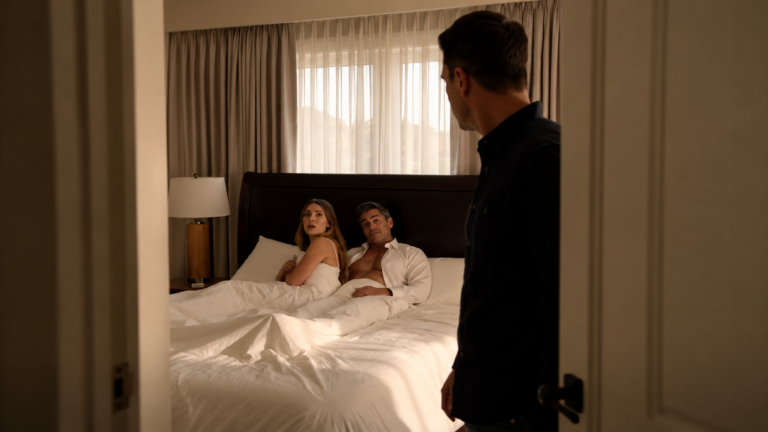
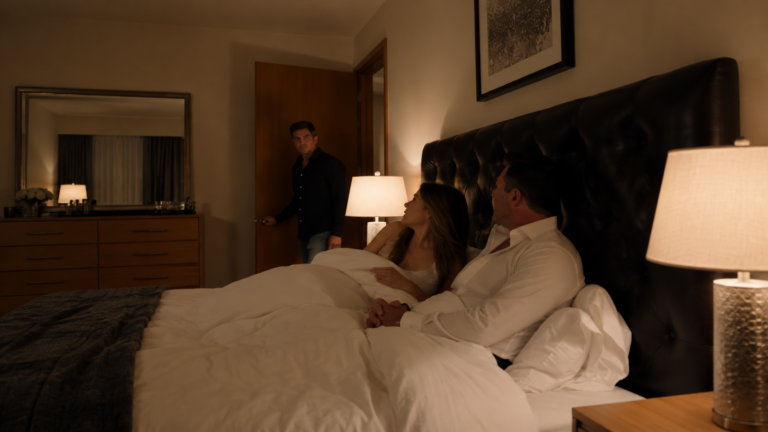
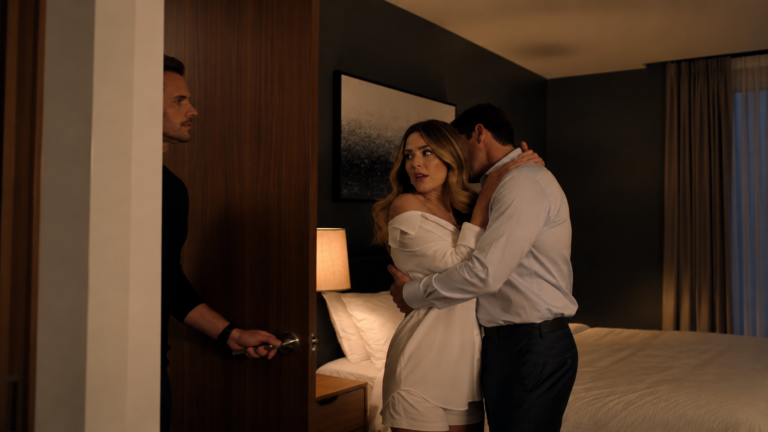
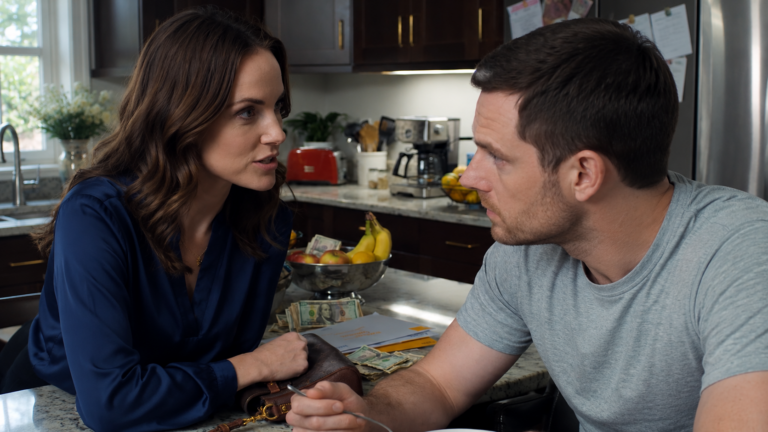
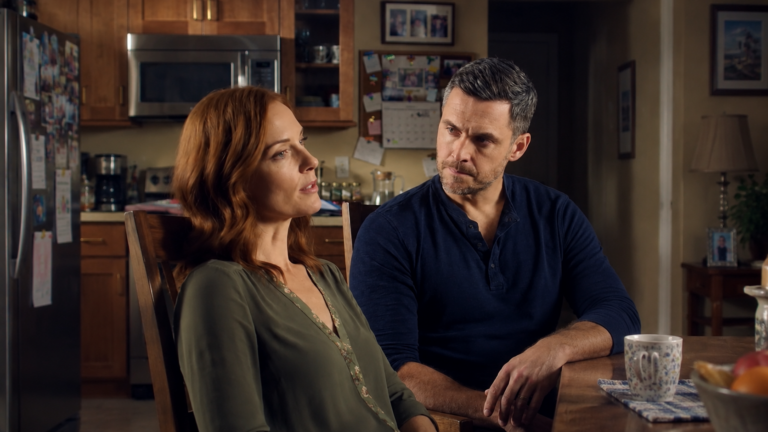
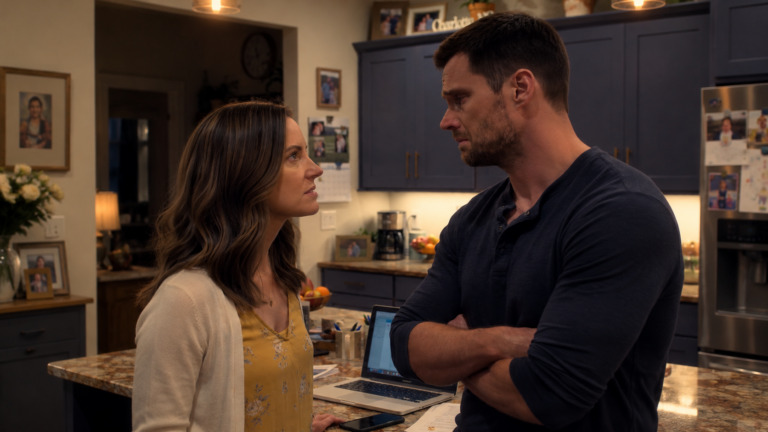
When he came home, Lauren had cooked soup. She left a bowl for him in the kitchen, then returned upstairs. He ate alone at the table where the confrontation had begun. Afterward he climbed the stairs and knocked on the spare-room door.
“I had the soup,” he said.
“Was it all right?”
“It was good.” He looked at the sewing patterns spread across the floor. “What are you making?”
“Nothing yet. I’m sorting what I have.”
He nodded. The answer described more than the fabric.
“Would you like to talk Sunday?” he asked. “Not about last night only. About whether there is anything we both want to try before making a decision.”
Lauren thought for a moment. “Sunday is good.”
“And until then?”
“Until then, I will answer you honestly if you ask a question. Even if the answer is uncomfortable.”
“Same,” Owen replied.
It wasn’t a promise to save the marriage. It was something narrower and more difficult to perform consistently. He went downstairs. Lauren returned to her patterns. Outside, the first autumn leaves were gathering along the curb.
Chapter Eleven: The Room Without a Stage
Sunday came cold and clear. They chose a small public garden because neither wanted their conversation to be shaped by the rooms where they’d been avoiding each other. They sat on a bench overlooking a patch of late flowers. Children ran along a path, careful not to step in the wet grass. A groundskeeper emptied a bin nearby.
Owen had brought three questions written on a folded card. Lauren had brought a notebook. They agreed not to read long statements. They would speak, listen, and ask again when they didn’t understand.
“Do you want to stay married?” Owen asked.
Lauren held the question without rushing to fill the silence. “I don’t know,” she said. “I know I want to stop lying. I know I don’t want Reid. I know I hurt you. I also know I was unhappy before he called. If we stay together, it can’t mean pretending we were fine until he appeared.”
“I agree,” Owen said. “I don’t know whether I can trust you again. I also don’t want the rest of our lives to become a trial where I look for evidence against you.”
She wrote that sentence down. Not because it was quotable, but because she wanted to remember how it felt to hear the truth without having it polished into something flattering.
They talked about money, work, loneliness, and the meals they had stopped sharing. They disagreed about several things. At one point Lauren grew defensive when Owen described the phone being turned over at dinner. She nearly accused him of spying, then remembered he had seen one message by accident and later sought advice because she had announced a date. She apologized for changing the subject. Owen acknowledged that he had used the agreement partly to frighten her into taking him seriously. Neither statement erased the other.
By the end of the hour they had no decision about divorce. They agreed to remain in separate rooms for the month, divide household expenses transparently, and choose a date to review whether continuing together was healthy. Lauren would not maintain contact with Reid. Owen would not use the threat of legal action to win ordinary disagreements. They would each have space to pursue work and interests without requiring the other to approve every ambition.
Across town, Megan was meeting with a restaurant consultant about the future of the business. Reid had sent several long apologies, some sincere, some still full of excuses. She had not decided what their marriage would become. What she knew was that the staff’s wages would not be turned into leverage during that decision. She stayed long enough to complete the refund list, then left for an interview at an accounting firm. She wore a navy jacket she hadn’t taken from her closet in years.
On the drive home from the garden, Owen asked whether Lauren wanted to stop for groceries. She said yes. They walked through the store with a list, choosing bread, lemons, and a bag of apples. At the checkout, the cashier asked whether they were together. It was an ordinary question about payment, but both hesitated for a fraction of a second.
“We’re splitting it,” Lauren answered, placing her items on the belt beside his.
The cashier nodded and continued scanning.
Later that evening, Lauren took the unsigned agreement from the drawer. She didn’t destroy it. She slid it into a folder beside the notes she’d made about the theater and placed the folder on a shelf where she and Owen could both find it. The paper no longer represented a verdict already delivered. It represented a decision they were still permitted to make without spectators.
Downstairs Owen called to ask whether she wanted tea. She said she would come down in a minute. Then she turned off the sewing lamp, closed the spare-room door gently behind her, and walked toward the kitchen without rehearsing a speech.
Downstairs, she paused hearing Owen searching the cupboard for peppermint tea. He had never remembered which shelf held it. She could have called down the answer, but instead she went to help him look. They found the tin behind a stack of bowls. Owen smiled faintly, and Lauren set two mugs on the counter. Neither mentioned Friday. There would be harder conversations, and neither knew their outcome. Tonight, they could begin with water, tea, and an ordinary question.
The End.